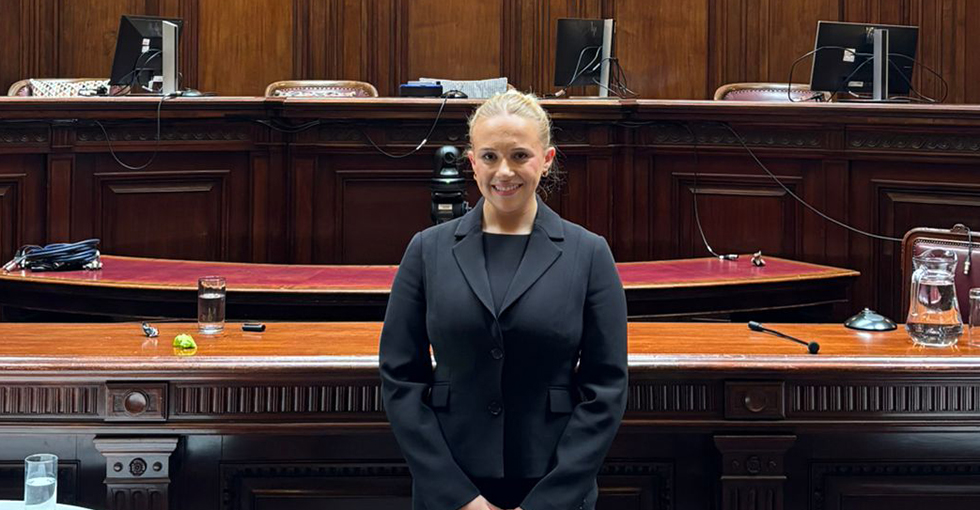
Following a 5-day trial in the Southampton Employment Tribunal, Kyran Kanda successfully defended a complex claim for reasonable adjustments spanning a 3-year period, harassment, victimisation, and discrimination arising from disability.
The Claimant, a train manager, was involved in an incident in March 2022 where he was threatened by a passenger without a ticket. He subsequently experienced anxiety and took time off work. During this period, he had several welfare calls with his line managers, which he alleged involved bullying, harassment, and a lack of sympathy. He returned to work in mid-2022 but claimed his employer failed to make reasonable adjustments. Over the next three years, he had repeated absences and phased returns. He raised a grievance that went through a three-stage process. He argued that events throughout this period amounted to further harassment, victimisation, and disability discrimination.
Representing the Respondent, Kyran argued at trial that the Claimant was not disabled at the material time and the employer neither knew nor reasonably ought to have known that the Claimant was disabled. Kyran argued that when the evidence was properly and fully analysed, it was clear that the Claimant did not suffer a substantial disadvantage by a PCP and the reasonable adjustments contended for were, in fact, implemented. The harassment, victimisation and arising from claims all fell to be dismissed. The conduct or unfavourable treatment were clearly not attributable to disability but rather genuine, non-discriminatory factors. The case was complicated further as almost all allegations related to events in 2022/2023. Kyran argued the claims were time barred and there were no just and equitable grounds to extend time, not least because of forensic prejudice to the Respondent and the absence of key witnesses who no longer worked for the Respondent, including the two line managers.
The ET unanimously dismissed all the claims. In reaching its findings, the Judge commended Kyran’s “impressive written closing submissions”. It found as follows:
- Disability – the Claimant was disabled at the material time and the Respondent ought to have known about it. Notes of the welfare calls referred to the Claimant struggling to sleep, spontaneously and inexplicable crying, and losing his appetite.
- Reasonable adjustments – The Claimant contended he had been denied a companion in welfare calls and wanted one present to ‘witness’ the alleged bullying. The ET found that this PCP did not put the Claimant at a substantial disadvantage when compared to a non-disabled person. The ET further agreed with Kyran’s submissions that other adjustments contended for, such as working shorter train journeys, had in fact been implemented. The Claimant was never compelled to work a longer train journey. The ET provided a useful reminder that the duty to provide reasonable adjustments is not a requirement on employers to accept everything a claimant wants. A respondent is entitled to consider the needs of its business and to have a robust discussion with a claimant.
- Harassment – The ET agreed with Kyran’s submissions with respect to all five allegations. In summary, the allegations of harassment (including one manager refusing to answer the Claimant’s calls, a second telling him to ‘go away’, and a third telling him to ‘forget about’ his grievance) either did not happen on the balance of probabilities, were not ‘related to’ disability, or did not have the proscribed purpose or effect. The ET provided a useful reminder that the words in s 26(1)(b) EqA are not to be “treated lightly” and their significance “must not be cheapened”. They are a control on minor incidents that are not harassment.
- Victimisation – The ET was split on whether C’s grievance was a protected act. The minority concluded it was not as it did not contain any reference, express or implied, to the Equality Act. The majority, however, concluded that it was connected to discrimination “in the broad sense” as the Claimant wanted a companion present because of his disability. It was a protected act within the meaning of s 27(2)(c) EqA, if not 27(2)(d) EqA. In any event, the detriments that followed were not done on the grounds of the protected act, but for non-discriminatory reasons.
- ‘Arising from’ – This claim took a similar form to the victimisation claim. The ET agreed with Kyran’s submissions that the unfavourable treatment (to the extent that there was any) was not caused by the ‘somethings’ arising. The Respondent witnesses had given a clear and credible account of their conduct which the ET accepted.
In concluding, the ET acknowledged the considerable upset experienced by the Claimant by events spanning the 3-year period but the claims were bound to be dismissed.
This article reflects the law as of the date it was published. Whilst every effort has been taken to ensure that the law in this article is correct, it is intended to give a general overview of the law for educational and/or informational purposes. It is not intended to be a substitute for specific legal advice and should not be relied upon for this purpose. This article represents the opinion of the author and does not necessarily reflect the view of any other member of St Philips Chambers.